
Card-room exercises
Blackjack hand totals
Read a blackjack hand one card at a time. Try the ace at both values, count the remaining ranks and see which single cards would take the total over 21.
How to read the examples
Read the cards as they arrive. A number card contributes its printed number, a picture card contributes ten, and an ace gives you a choice. Try it as one first. If another ten points would still leave the whole hand at twenty-one or less, that ace may count as eleven. Two aces cannot both remain high: even before you add another card, eleven plus eleven has already crossed the limit.
Use a spare piece of paper to cover the answers. Next to each deal write the low count and, if it exists, the higher legal count. These two entries explain why a hand can absorb a large card and end up with a smaller displayed total. The original cards have not changed. The difference comes from moving an ace from the eleven-point column into the one-point column.
For the unseen-card question, start afresh with one ordinary pack of fifty-two cards for each numbered deal. Cross out only the cards on that line. Three kings can remain after you have seen one king, but there may still be four queens and four jacks. All three ranks carry ten points. A list of ranks and a count of physical cards therefore answer two different questions. No dealer hand or wager is part of these exercises.
Exercise 1: 9♣, A♦
Lay out 9♣, A♦. Before turning over another card, give the highest legal total. Now suppose the next card is 5♥. Would the hand still fit beneath the ceiling, hit twenty-one exactly, or go over? Keep the first answer so you can compare the two decisions.
Show the working
The starting ranks contribute 9 + 1 when every ace counts as one. Their sum is 10. An ace can take the extra ten here, bringing the hand to 20. With 5♥ included, counting again from the beginning gives 15.
Check the whole remaining pack against your answer. The ranks that can arrive without a bust are 2, 3, 4, 5, 6, 7, 8, 9, 10, J, Q, K, A. They account for 50 of the 50 unseen cards once the displayed cards have been removed. The ranks producing exactly twenty-one are A. Distinguish an exact finish from a card that merely keeps the hand in play.
Exercise 2: 6♣, 5♠, 2♥
Lay out 6♣, 5♠, 2♥. Before turning over another card, give the highest legal total. Now suppose the next card is 3♣. Would the hand still fit beneath the ceiling, hit twenty-one exactly, or go over? Keep the first answer so you can compare the two decisions.
Show the working
The starting ranks contribute 6 + 5 + 2 when every ace counts as one. Their sum is 13. Adding ten for an ace is unavailable in this hand, so the low count also gives the final total. With 3♣ included, counting again from the beginning gives 16.
Check the whole remaining pack against your answer. The ranks that can arrive without a bust are 2, 3, 4, 5, 6, 7, 8, A. They account for 29 of the 49 unseen cards once the displayed cards have been removed. The ranks producing exactly twenty-one are 8. Distinguish an exact finish from a card that merely keeps the hand in play.
Exercise 3: 7♣, 4♦, 5♥, 2♣
Lay out 7♣, 4♦, 5♥, 2♣. Before turning over another card, give the highest legal total. Now suppose the next card is 8♥. Would the hand still fit beneath the ceiling, hit twenty-one exactly, or go over? Keep the first answer so you can compare the two decisions.
Show the working
The starting ranks contribute 7 + 4 + 5 + 2 when every ace counts as one. Their sum is 18. Adding ten for an ace is unavailable in this hand, so the low count also gives the final total. With 8♥ included, counting again from the beginning gives 26.
Check the whole remaining pack against your answer. The ranks that can arrive without a bust are 2, 3, A. They account for 11 of the 48 unseen cards once the displayed cards have been removed. The ranks producing exactly twenty-one are 3. Distinguish an exact finish from a card that merely keeps the hand in play.
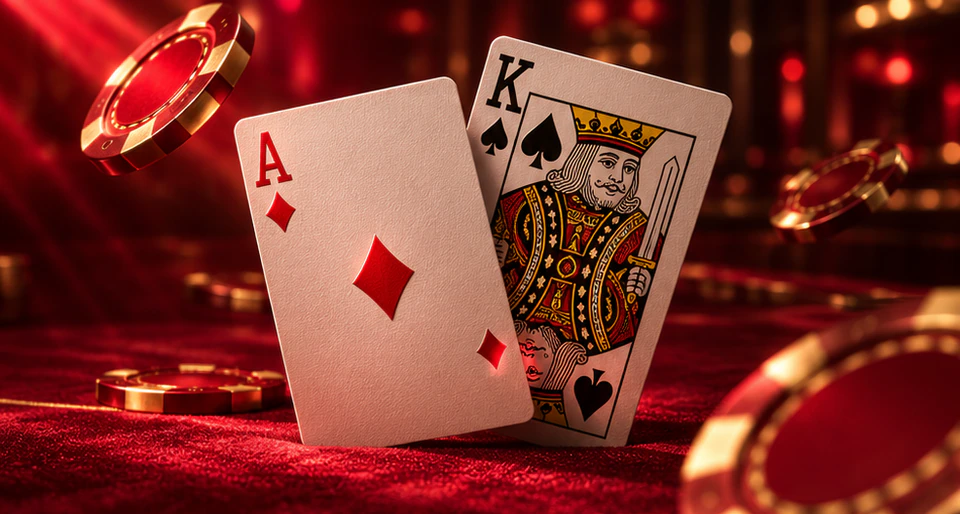
Exercise 4: A♦, 3♣
Lay out A♦, 3♣. Before turning over another card, give the highest legal total. Now suppose the next card is 9♣. Would the hand still fit beneath the ceiling, hit twenty-one exactly, or go over? Keep the first answer so you can compare the two decisions.
Show the working
The starting ranks contribute 1 + 3 when every ace counts as one. Their sum is 4. An ace can take the extra ten here, bringing the hand to 14. With 9♣ included, counting again from the beginning gives 13.
Check the whole remaining pack against your answer. The ranks that can arrive without a bust are 2, 3, 4, 5, 6, 7, 8, 9, 10, J, Q, K, A. They account for 50 of the 50 unseen cards once the displayed cards have been removed. The ranks producing exactly twenty-one are 7. Distinguish an exact finish from a card that merely keeps the hand in play.
Exercise 5: 5♦, Q♥, 4♠
Lay out 5♦, Q♥, 4♠. Before turning over another card, give the highest legal total. Now suppose the next card is 10♦. Would the hand still fit beneath the ceiling, hit twenty-one exactly, or go over? Keep the first answer so you can compare the two decisions.
Show the working
The starting ranks contribute 5 + 10 + 4 when every ace counts as one. Their sum is 19. Adding ten for an ace is unavailable in this hand, so the low count also gives the final total. With 10♦ included, counting again from the beginning gives 29.
Check the whole remaining pack against your answer. The ranks that can arrive without a bust are 2, A. They account for 8 of the 49 unseen cards once the displayed cards have been removed. The ranks producing exactly twenty-one are 2. Distinguish an exact finish from a card that merely keeps the hand in play.
Exercise 6: 4♣, 8♣, 3♣, 3♥
Lay out 4♣, 8♣, 3♣, 3♥. Before turning over another card, give the highest legal total. Now suppose the next card is 2♥. Would the hand still fit beneath the ceiling, hit twenty-one exactly, or go over? Keep the first answer so you can compare the two decisions.
Show the working
The starting ranks contribute 4 + 8 + 3 + 3 when every ace counts as one. Their sum is 18. Adding ten for an ace is unavailable in this hand, so the low count also gives the final total. With 2♥ included, counting again from the beginning gives 20.
Check the whole remaining pack against your answer. The ranks that can arrive without a bust are 2, 3, A. They account for 10 of the 48 unseen cards once the displayed cards have been removed. The ranks producing exactly twenty-one are 3. Distinguish an exact finish from a card that merely keeps the hand in play.
Exercise 7: A♥, 6♥
Lay out A♥, 6♥. Before turning over another card, give the highest legal total. Now suppose the next card is 5♠. Would the hand still fit beneath the ceiling, hit twenty-one exactly, or go over? Keep the first answer so you can compare the two decisions.
Show the working
The starting ranks contribute 1 + 6 when every ace counts as one. Their sum is 7. An ace can take the extra ten here, bringing the hand to 17. With 5♠ included, counting again from the beginning gives 12.
Check the whole remaining pack against your answer. The ranks that can arrive without a bust are 2, 3, 4, 5, 6, 7, 8, 9, 10, J, Q, K, A. They account for 50 of the 50 unseen cards once the displayed cards have been removed. The ranks producing exactly twenty-one are 4. Distinguish an exact finish from a card that merely keeps the hand in play.
Exercise 8: 6♣, 4♣, 3♠
Lay out 6♣, 4♣, 3♠. Before turning over another card, give the highest legal total. Now suppose the next card is 2♦. Would the hand still fit beneath the ceiling, hit twenty-one exactly, or go over? Keep the first answer so you can compare the two decisions.
Show the working
The starting ranks contribute 6 + 4 + 3 when every ace counts as one. Their sum is 13. Adding ten for an ace is unavailable in this hand, so the low count also gives the final total. With 2♦ included, counting again from the beginning gives 15.
Check the whole remaining pack against your answer. The ranks that can arrive without a bust are 2, 3, 4, 5, 6, 7, 8, A. They account for 29 of the 49 unseen cards once the displayed cards have been removed. The ranks producing exactly twenty-one are 8. Distinguish an exact finish from a card that merely keeps the hand in play.
Exercise 9: 2♣, 7♠, 4♥, 5♠
Lay out 2♣, 7♠, 4♥, 5♠. Before turning over another card, give the highest legal total. Now suppose the next card is J♠. Would the hand still fit beneath the ceiling, hit twenty-one exactly, or go over? Keep the first answer so you can compare the two decisions.
Show the working
The starting ranks contribute 2 + 7 + 4 + 5 when every ace counts as one. Their sum is 18. Adding ten for an ace is unavailable in this hand, so the low count also gives the final total. With J♠ included, counting again from the beginning gives 28.
Check the whole remaining pack against your answer. The ranks that can arrive without a bust are 2, 3, A. They account for 11 of the 48 unseen cards once the displayed cards have been removed. The ranks producing exactly twenty-one are 3. Distinguish an exact finish from a card that merely keeps the hand in play.
Exercise 10: A♥, 7♣
Lay out A♥, 7♣. Before turning over another card, give the highest legal total. Now suppose the next card is J♦. Would the hand still fit beneath the ceiling, hit twenty-one exactly, or go over? Keep the first answer so you can compare the two decisions.
Show the working
The starting ranks contribute 1 + 7 when every ace counts as one. Their sum is 8. An ace can take the extra ten here, bringing the hand to 18. With J♦ included, counting again from the beginning gives 18.
Check the whole remaining pack against your answer. The ranks that can arrive without a bust are 2, 3, 4, 5, 6, 7, 8, 9, 10, J, Q, K, A. They account for 50 of the 50 unseen cards once the displayed cards have been removed. The ranks producing exactly twenty-one are 3. Distinguish an exact finish from a card that merely keeps the hand in play.
Exercise 11: 6♦, K♥, 3♦
Lay out 6♦, K♥, 3♦. Before turning over another card, give the highest legal total. Now suppose the next card is 2♠. Would the hand still fit beneath the ceiling, hit twenty-one exactly, or go over? Keep the first answer so you can compare the two decisions.
Show the working
The starting ranks contribute 6 + 10 + 3 when every ace counts as one. Their sum is 19. Adding ten for an ace is unavailable in this hand, so the low count also gives the final total. With 2♠ included, counting again from the beginning gives 21.
Check the whole remaining pack against your answer. The ranks that can arrive without a bust are 2, A. They account for 8 of the 49 unseen cards once the displayed cards have been removed. The ranks producing exactly twenty-one are 2. Distinguish an exact finish from a card that merely keeps the hand in play.
Exercise 12: 3♦, A♠, 4♦, J♣
Lay out 3♦, A♠, 4♦, J♣. Before turning over another card, give the highest legal total. Now suppose the next card is 7♠. Would the hand still fit beneath the ceiling, hit twenty-one exactly, or go over? Keep the first answer so you can compare the two decisions.
Show the working
The starting ranks contribute 3 + 1 + 4 + 10 when every ace counts as one. Their sum is 18. Adding ten for an ace is unavailable in this hand, so the low count also gives the final total. With 7♠ included, counting again from the beginning gives 25.
Check the whole remaining pack against your answer. The ranks that can arrive without a bust are 2, 3, A. They account for 10 of the 48 unseen cards once the displayed cards have been removed. The ranks producing exactly twenty-one are 3. Distinguish an exact finish from a card that merely keeps the hand in play.
Exercise 13: A♥, 7♦
Lay out A♥, 7♦. Before turning over another card, give the highest legal total. Now suppose the next card is 4♦. Would the hand still fit beneath the ceiling, hit twenty-one exactly, or go over? Keep the first answer so you can compare the two decisions.
Show the working
The starting ranks contribute 1 + 7 when every ace counts as one. Their sum is 8. An ace can take the extra ten here, bringing the hand to 18. With 4♦ included, counting again from the beginning gives 12.
Check the whole remaining pack against your answer. The ranks that can arrive without a bust are 2, 3, 4, 5, 6, 7, 8, 9, 10, J, Q, K, A. They account for 50 of the 50 unseen cards once the displayed cards have been removed. The ranks producing exactly twenty-one are 3. Distinguish an exact finish from a card that merely keeps the hand in play.
Exercise 14: 2♥, 10♦, 8♠
Lay out 2♥, 10♦, 8♠. Before turning over another card, give the highest legal total. Now suppose the next card is Q♥. Would the hand still fit beneath the ceiling, hit twenty-one exactly, or go over? Keep the first answer so you can compare the two decisions.
Show the working
The starting ranks contribute 2 + 10 + 8 when every ace counts as one. Their sum is 20. Adding ten for an ace is unavailable in this hand, so the low count also gives the final total. With Q♥ included, counting again from the beginning gives 30.
Check the whole remaining pack against your answer. The ranks that can arrive without a bust are A. They account for 4 of the 49 unseen cards once the displayed cards have been removed. The ranks producing exactly twenty-one are A. Distinguish an exact finish from a card that merely keeps the hand in play.